ES levels on TradingView: the S&P 500 future, MES and US500
ES is the most traded index future in the world. Whether you trade ES, MES or a US500 CFD, the same reference levels matter: the overnight range, the open, yesterday's close of the S&P 500, last week's high and low. This page shows which ones, why the S&P 500 close sits at a different price on ES, and how to get every level on your chart at the right price.
On this page
Part of Basics
Free TradingView indicator with all session, week and month levels for index, futures and CFD charts.
Install Basics (free) →Part of Untested Levels
Free TradingView indicator that marks earlier closes, opens and gaps the market has not traded back to — on index, futures and CFD charts.
Install Untested Levels (free) →
ES, MES, NES and the S&P 500 at a glance
The same market comes in several instruments. They move together, but not at the same price and not at the same hours:
| S&P 500 index | The official index (SPX). Only calculated while the stock market is open: 09:30 – 16:00 New York time. Its closing and opening prices are the levels many traders watch. |
|---|---|
| ES (E-mini S&P 500) | The main future on CME. Trades almost around the clock — Sunday 18:00 to Friday 17:00 New York time, with a one-hour break every day from 17:00 — and usually above the index. $50 per index point. |
| MES (Micro E-mini) | The same price as ES at a tenth of the value: $5 per point. Its own order book can make slightly different highs and lows. |
| NES (Nano E-mini) | The smallest S&P 500 future on CME, trading since August 2026: the same price level as ES at a tenth of MES's value, $0.50 per point. Like MES it has its own, thinner order book. |
| US500 / SPX500 CFD | A broker product that follows the index itself, not the future — and trades outside the stock market's hours. |
Basics and Untested Levels recognise every S&P 500 ticker they support — index, ES, MES, NES, specific contract months and the CFDs of FOREX.com, IG, Trade Nation and Pepperstone — and set themselves up for it. The full list: supported tickers.
Why US traders use futures
In the United States, CFDs count as swaps under the law, and private traders are not allowed to trade them. That is why US day traders trade the futures themselves — and why the micro and nano contracts exist: they make a small position possible on the exchange. Outside the US, many traders use a CFD on the same index instead. Either way the levels are the same: Basics draws the main future's levels on every one of these charts, each at that chart's price.
One level, two prices
ES trades above the S&P 500 by the cash-future difference — tens of points, more right after a roll, less towards expiry. So yesterday's S&P 500 close is not at the same number on your ES chart. Basics converts every index level to the price of the chart you trade, and every ES level to the price of the index or CFD: one level, always at the right place.
Example: on Monday 28 September 2026 the S&P 500 opened the week at 7,721.70. On ES that level sat at about 7,776 — and on Wednesday ES stalled at it until noon. See CwO index.
The ES trading day (New York time)
| Pre-market | 18:00 (previous day) – 09:30. Its high, low and middle are PMKT H / PMKT L and PMKT M. |
|---|---|
| Regular trading hours | 09:30 – 16:00, the hours of the stock market. The price at 09:30 is RTH O; the official index open is RTH O index. |
| After-hours | 16:00 – 17:00, until the futures day ends. The exchange sets the settlement price at the cash close. |
Set your chart to New York time and these hours appear where you expect them — see trading sessions and TradingView tips.
The levels ES traders watch — with real ES examples
Every card opens the full explanation of that level, with a chart where price reacted to it.
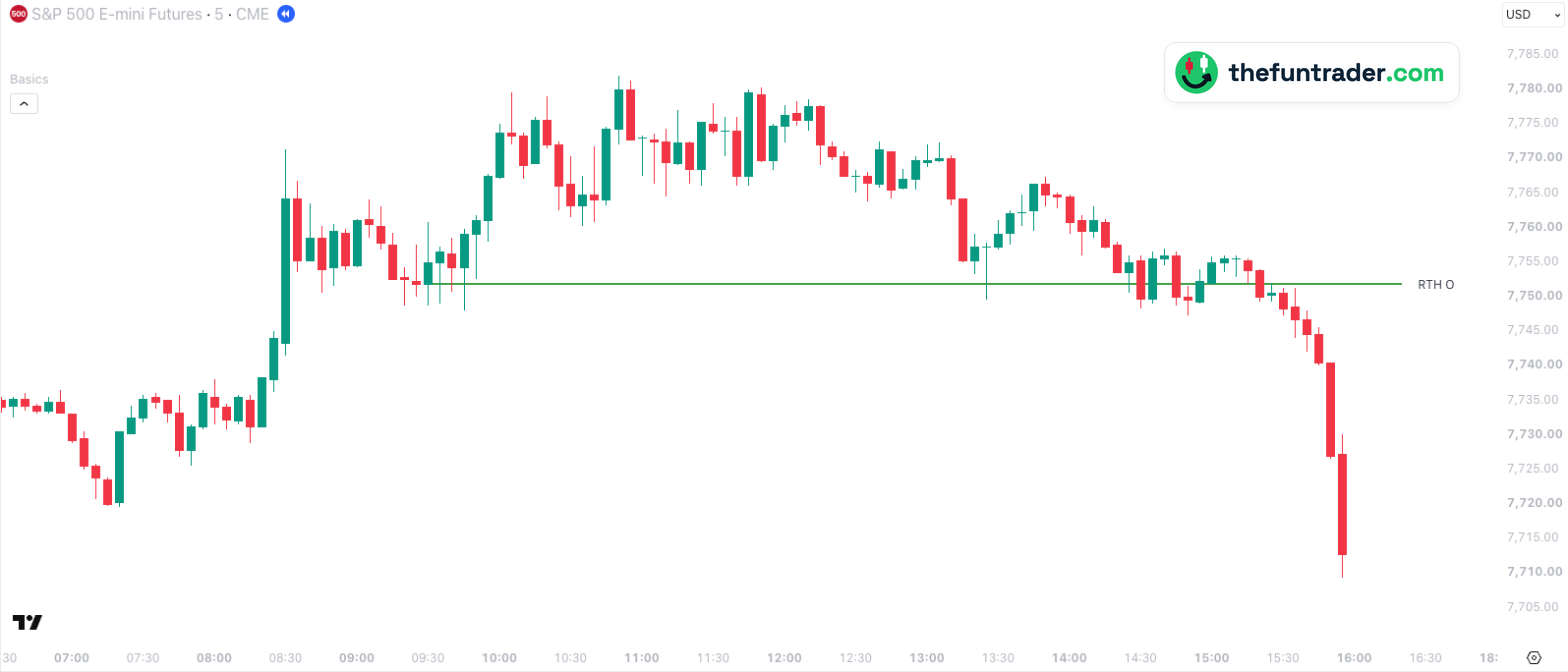 RTH OThe price at the 09:30 open — ES 5-min, 30 Sep
 PMKT H / L / MThe overnight range, from 18:00 to 09:30 — ES 15-min, 16 Oct
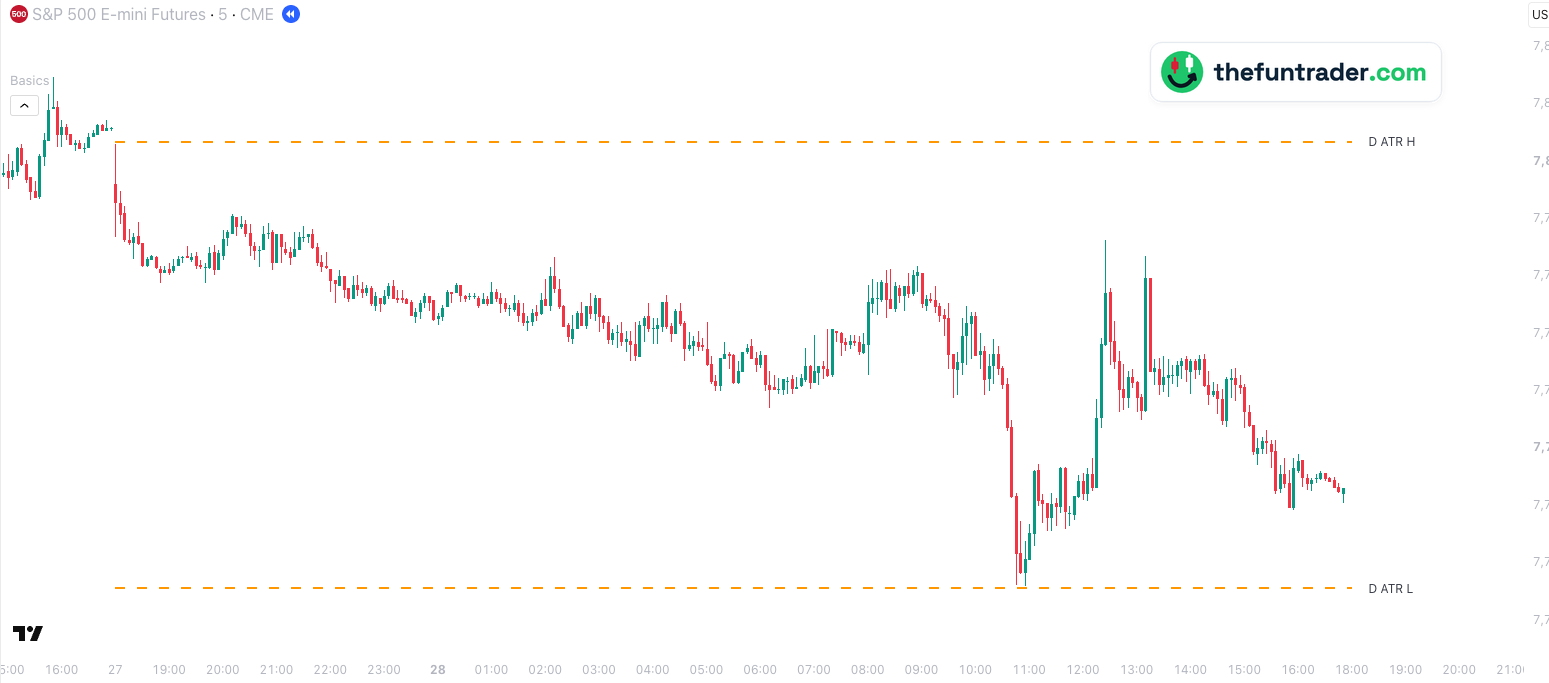 D ATR H / LWhere an average day ends — ES 5-min, 28 Sep
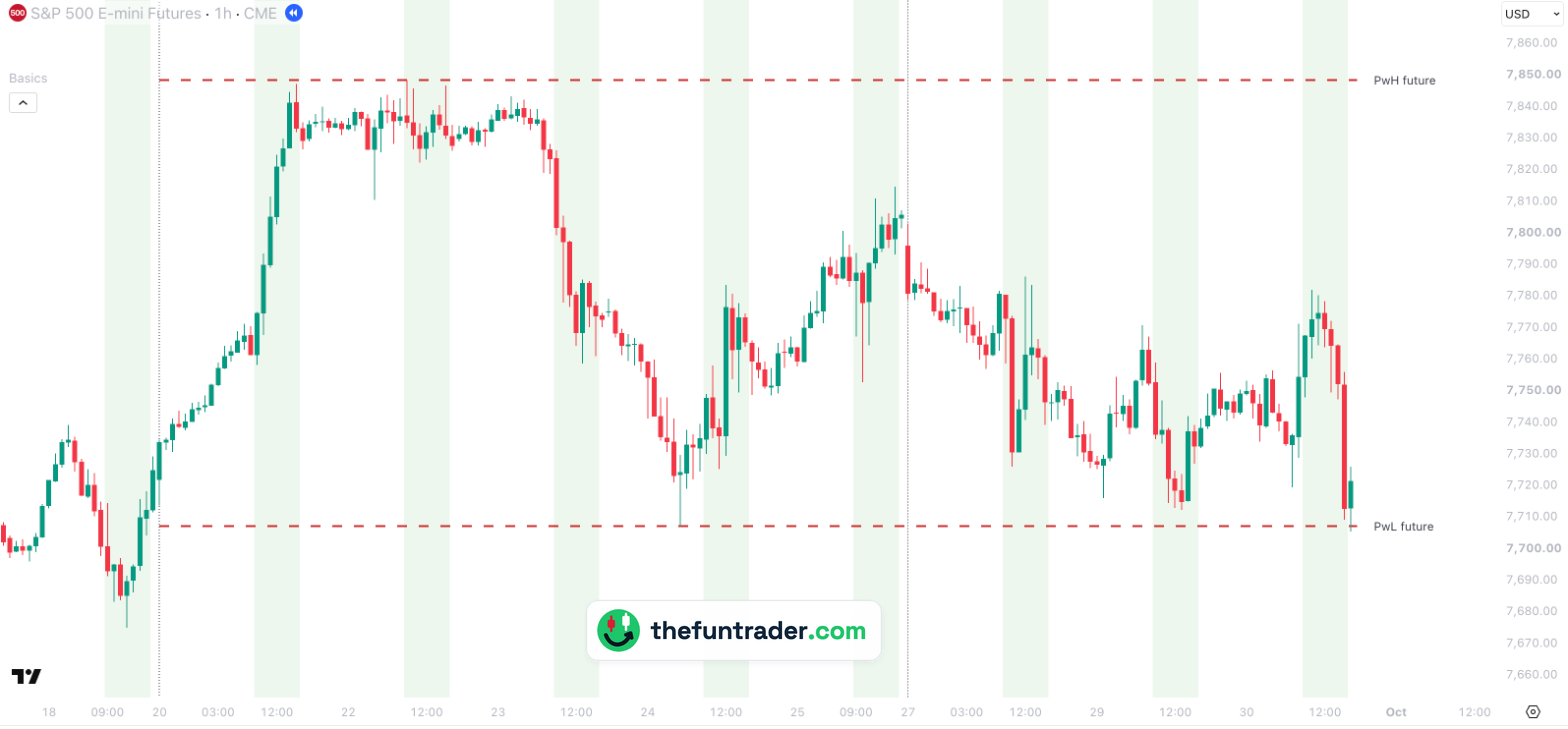 PwH / PwL futureLast week's high and low of ES — 1-hour, 30 Sep
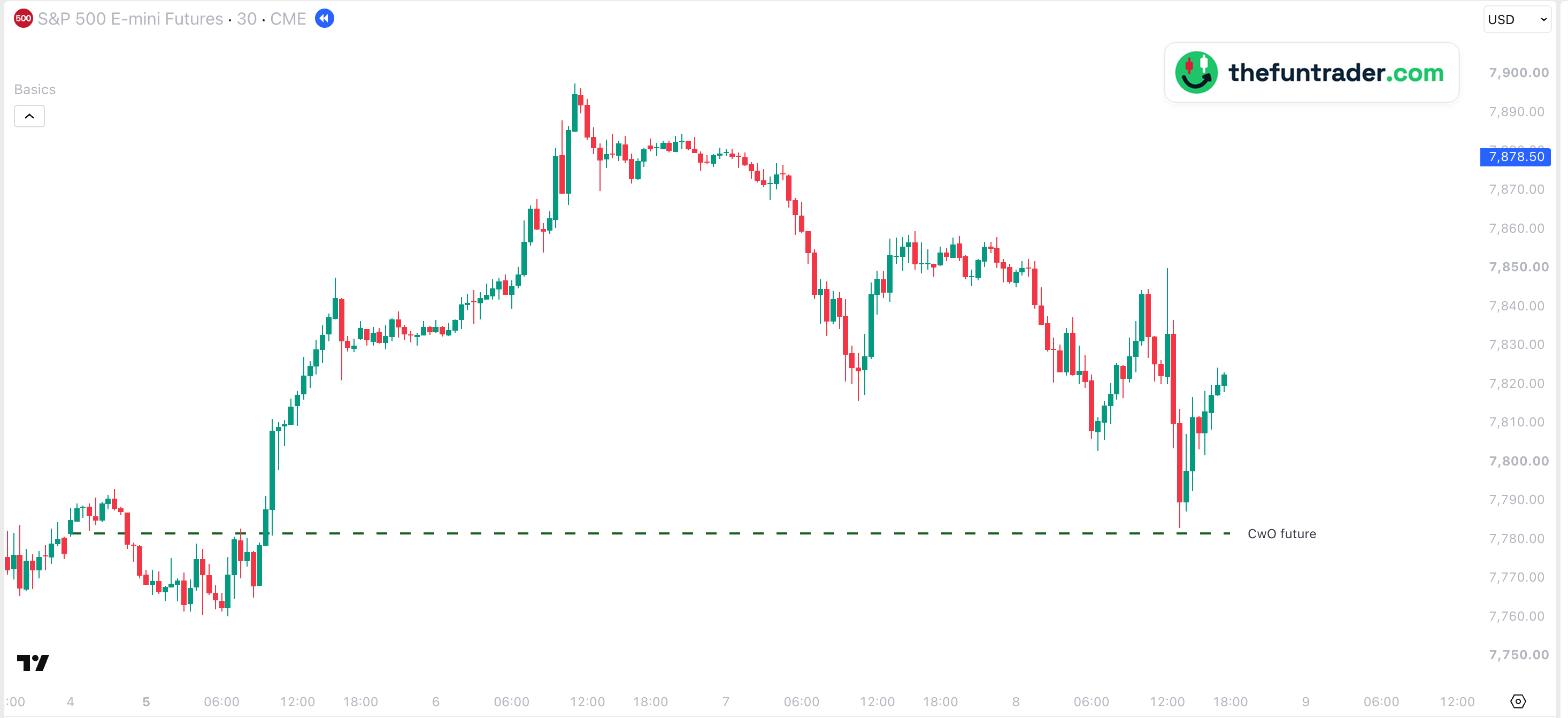 CwO futureWhere ES opened the week — 30-min, 8 Oct
 Cw 50% / 61.8% futureThe levels inside this week's range — 30-min, 7 Oct
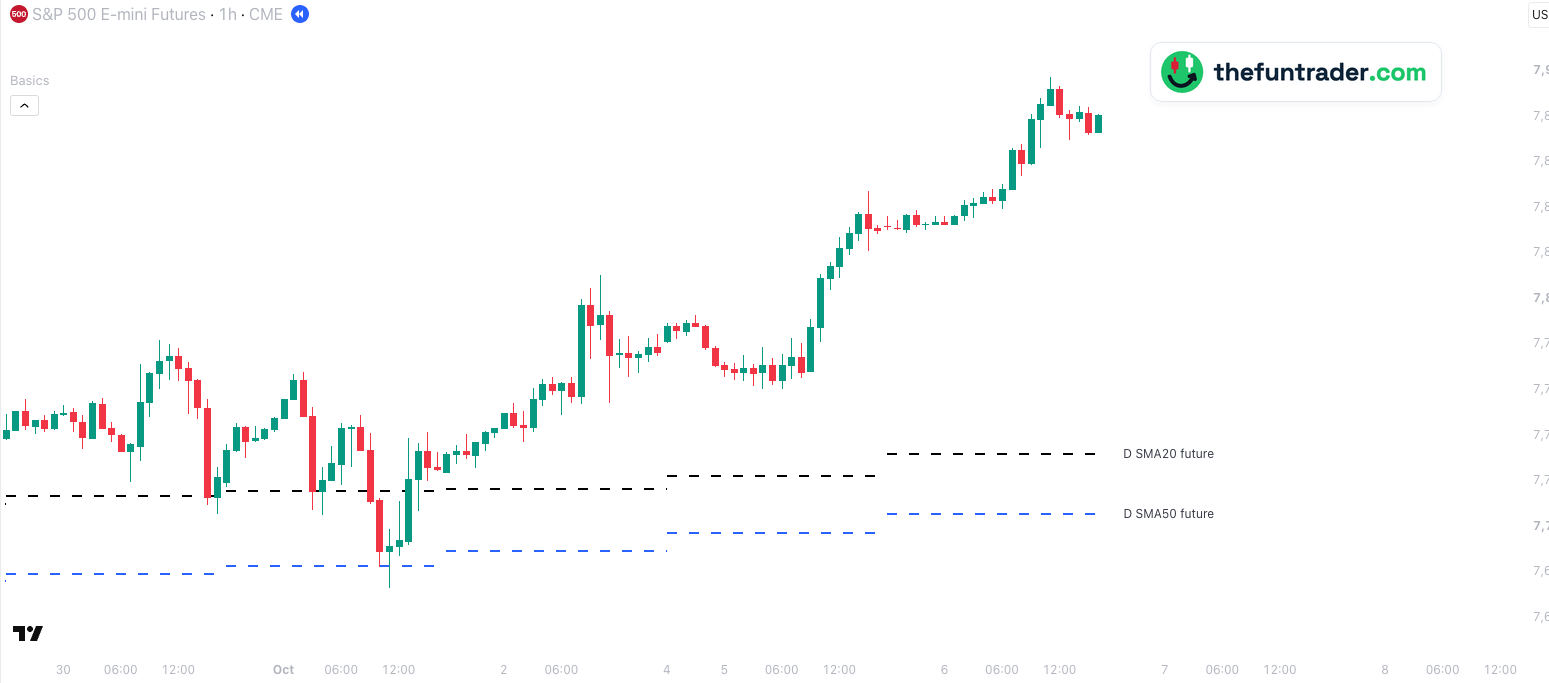 D SMA futureThe 20, 50 and 200-day averages of ES — 1-hour, 6 Oct
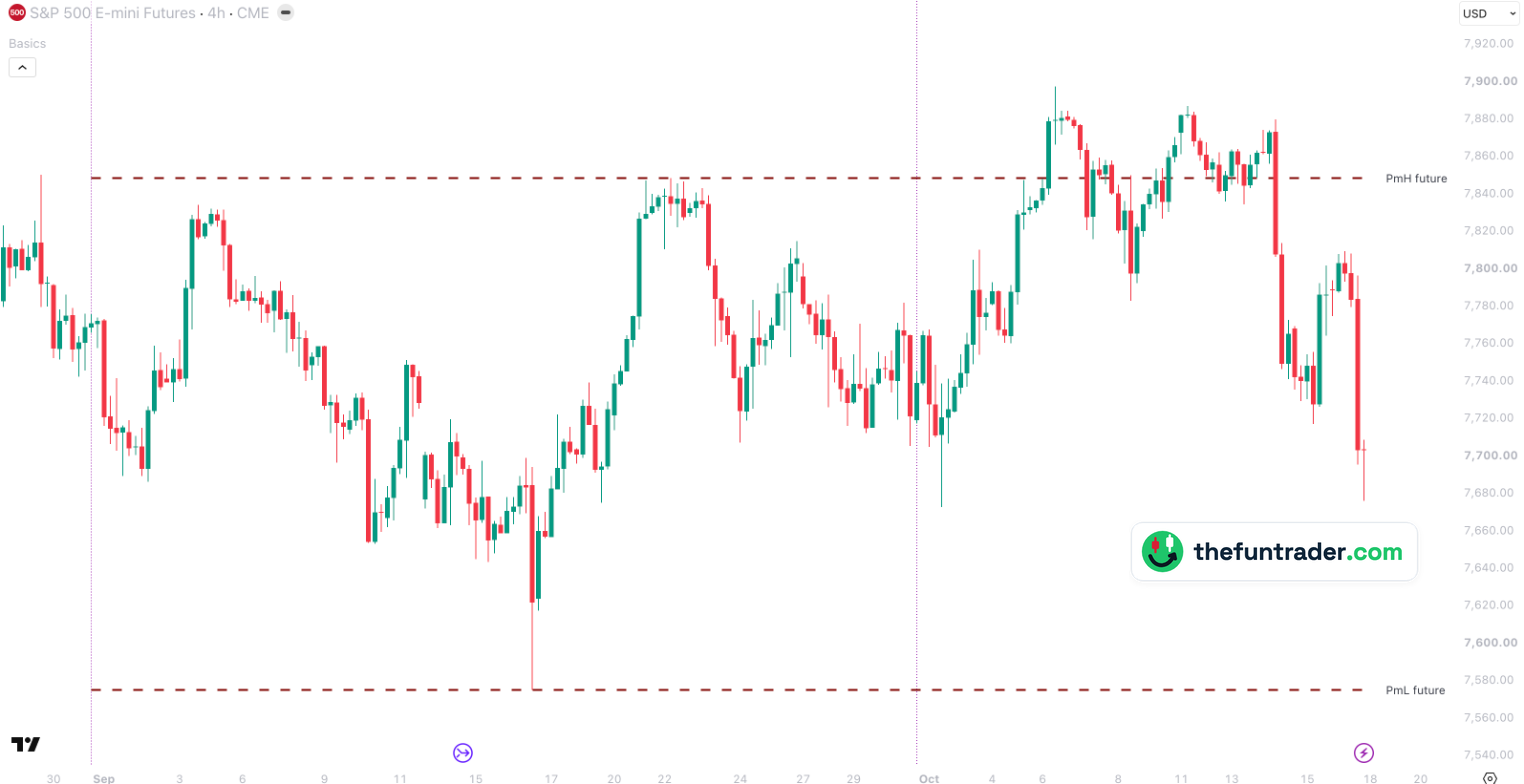 PmH / PmL futureLast month's high and low of ES — 4-hour, 16 Oct
 Period 1 and 2Two windows where the market often turns — 5-min, 15 Oct
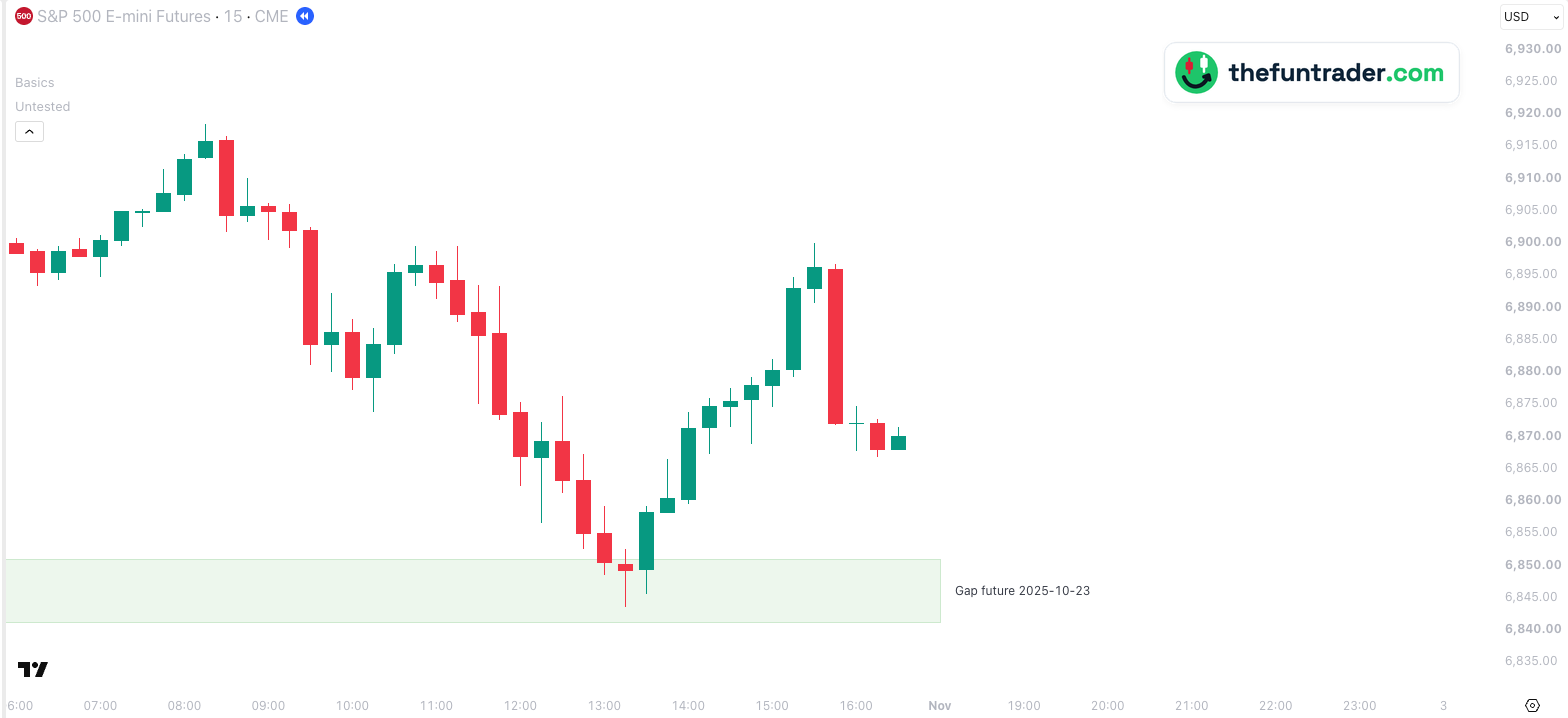 Gap future (Untested)A gap that stayed open for days — ES 15-min, 31 Oct 2025
All levels at a glance: every Basics element and every Untested element.
Contract rolls
ES expires every quarter, in March, June, September and December. In the days before expiry the volume moves to the next contract, and ES1! on TradingView switches with it. The new contract has three more months to run, so it trades at a different price — right after a roll the gap to the index can jump by tens of points. A level from before the roll can then exist twice: as it traded, and in the new contract's prices. Basics can draw both — see back-adjusted levels. Whether your chart's B-ADJ is on or off doesn't change the levels; it only moves the older candles.
Real-time or delayed data
Without a CME real-time subscription TradingView shows ES 10–15 minutes late. The levels themselves are not affected; a few lines that follow ES live — such as VWAP and the pre-market range while it forms — then lag by that delay, and Basics shows a small notice.
Set it up in two minutes
- Open an ES, MES, NES or US500 chart on TradingView and set it to New York time.
- Add Basics — it recognises the ticker and draws the levels.
- Add Untested Levels next to it for the older closes, opens and gaps that are still in play.
Frequently asked questions
Which ticker do I use for ES on TradingView?
ES1! (CME_MINI:ES1!) is the continuous front-month contract; MES1! is the micro and NES1! the nano. A specific contract such as ESZ2026 works too. Basics and Untested Levels recognise all of them, plus the S&P 500 index and the US500 / SPX500 CFDs of the supported brokers.
Why is the S&P 500's closing price at a different price on ES?
ES trades above the index by the cash-future difference, which changes every day. Basics converts every index level with the current difference, so the S&P 500's close lands at the right price on ES. See cash-future difference.
Do the levels work on MES and NES?
Yes. MES and NES trade at the same price level as ES, and Basics draws the levels of ES itself on their charts — the main future, where most of the volume trades. See main future.
And on a US500 or SPX500 CFD?
Yes. A CFD follows the index, so index levels are drawn as they are and the ES levels are converted to the CFD's price.
What time does the ES trading day start?
At 18:00 New York time the evening before; the stock market opens at 09:30 and closes at 16:00, and the futures day ends at 17:00. Set your chart to New York time and the sessions appear at the times you know.
Is Straydog Zones & Levels for ES?
No — those are DAX levels. For ES use Basics and Untested Levels; both are free.
Put the ES levels on your chart
Basics and Untested Levels are free on TradingView and set themselves up for ES, MES, NES and US500 — no settings needed.