Untested Levels for TradingView: every element explained
See every element explained in the list below ↓Untested Levels marks the earlier levels that price has not traded back to yet: previous closing prices of the index, earlier opening prices and unfilled gaps on the index and the future. Basics draws today's reference levels; Untested adds the older ones that are still in play. It is free, sets itself up for your ticker — the same markets as Basics, for example ES or a GER40 CFD — and shows every level at the right price for the chart you trade.
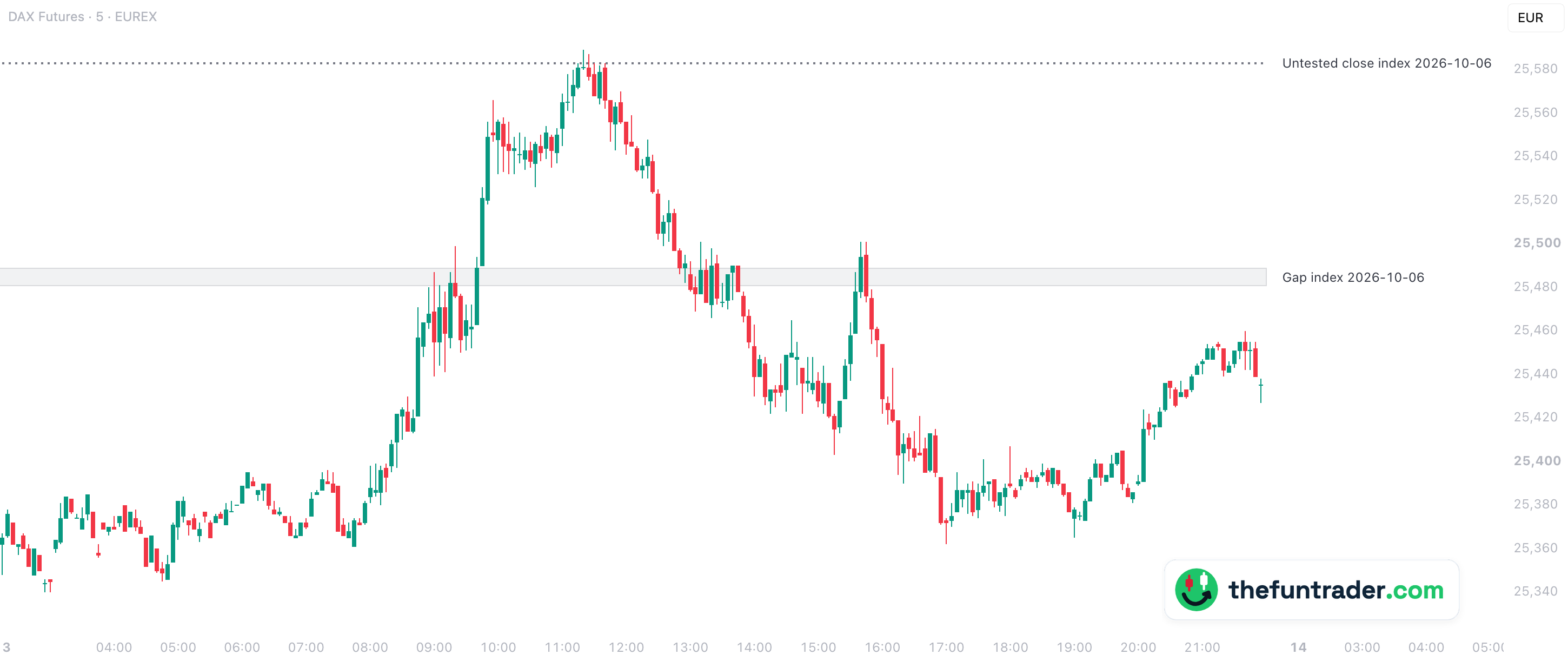
Untested, then tested today
A level stays on the chart while price has not traded back to it. When today's price touches it, it turns grey for the rest of the day — so you can still see that it mattered — and it is gone when the next session starts.
On every chart, at the right price
Closes, official opens and index gaps come from the index, CFD opens from the CFD, future gaps from the main future. Every element appears on index, futures and CFD charts, converted with the cash-future difference where needed.
Made to run with Basics
Untested leaves out what Basics already draws — the previous closing price and today's opening prices — so the two indicators don't draw the same level twice.
All elements at a glance
Click a column heading to sort. Type under a heading to filter (text matches anywhere; >1 / <3 compare numbers; filters combine). Click a row to highlight it.Search all columns or pick one, and sort with the menu. Tap a card to highlight it; tap ? for an explanation. Every colour, width and style can be changed in the indicator settings.
Good to know
| Charts and timeframes | Index, futures (main, mini, micro, nano) and CFD charts of the supported markets — the same as Basics. Charts from 1 second up to the daily chart; nothing on weekly and monthly charts, because the levels are day-based. |
|---|---|
| How far back | Closing prices, official opening prices and gaps: up to 1000 trading days (about four years), the same number on every timeframe. CFD opening prices: about three months. |
| Data | No paid data subscription needed. Whether a future gap was reached today follows the main future; without a real-time futures subscription TradingView delivers its prices 10–15 minutes late, and the indicator shows a small notice. |
| Chart timezone | Any timezone works. With the chart in the market's home timezone — New York, Berlin, London or Amsterdam — the levels appear at the clock times you know. See trading sessions. |
| Around the quarterly roll | Future gaps keep the price the future really traded at, also on a back-adjusted chart. For a few days around a roll, future-based levels can be off while the period they look at contains two contracts; this corrects itself. See back-adjusted levels. |
| Future gaps on an index chart | Shown only while the index's stock market is open — for example not on the S&P 500 index chart in the European morning. On futures and CFD charts they are always shown. |
| Bar Replay | In TradingView's Bar Replay the indicator only sees the bars the chart has loaded, so the lists reach back a few months instead of four years, and CFD opening prices may not be shown. |
| Holidays | After a day with incomplete session data the levels correct themselves on the next regular trading day. |
Put the untested levels on your own chart
Untested Levels is free on TradingView. Add it next to Basics on any supported chart — for example NQ or a UK100 CFD — and it configures itself.